

The Mystery Wing
Field Cases & The Traveling Satchel
This wing of the Museum is dedicated to field investigation.
Small towns. Strange signals. Hidden compartments.
Footsteps in the attic. Light in the basement.
A satchel left behind.
Each case begins simply.
A question.
A clue.
A place that doesn’t quite add up.
The work is careful, cooperative, and persistent.
We look closely.
We test what we find.
We follow the thread until it resolves.
Every mystery reaches an ending.
Some endings close the door.
Some open a second one.
Across cases, patterns begin to emerge.
Objects recur. Marks reappear.
What seems isolated may not be.
This is not horror.
It is not spectacle.
It is curiosity practiced with discipline.
Adventure with integrity.
Investigation that honors completion.
You are invited to enter a case.
Stay through the resolution.
See what remains afterward.
The shelf is not empty.
The next satchel is waiting.
Le Secret de la Vieille Horloge
French Layer (Mid-Century Tone)
Il était tard dans l’après-midi lorsque la jeune enquêtrice engagea sa voiture sur une étroite route de campagne bordée de haies et de champs pâlis par l’hiver. L’air était immobile, et la lumière reposait doucement sur la plaine ouverte.
À l’approche d’un léger tournant, elle aperçut une petite fille marchant seule près du bord du chemin.
Les pas de l’enfant étaient hésitants. Par moments, elle essuyait ses yeux du revers de la main, comme résolue à se montrer courageuse. Une fois, elle s’arrêta et regarda derrière elle, vers une maison lointaine à peine visible à travers une rangée d’arbres.
La conductrice ralentit aussitôt et immobilisa la voiture avec précaution.
« Pourquoi donc, quel est le problème ? » demanda-t-elle avec bonté.
L’enfant hésita avant de répondre. Elle leva plutôt une petite main et désigna la maison — une demeure silencieuse dont une fenêtre était assombrie et où, disait-on, une horloge s’était arrêtée à une heure que nul ne semblait pouvoir rappeler avec exactitude.
The secret of the old clock
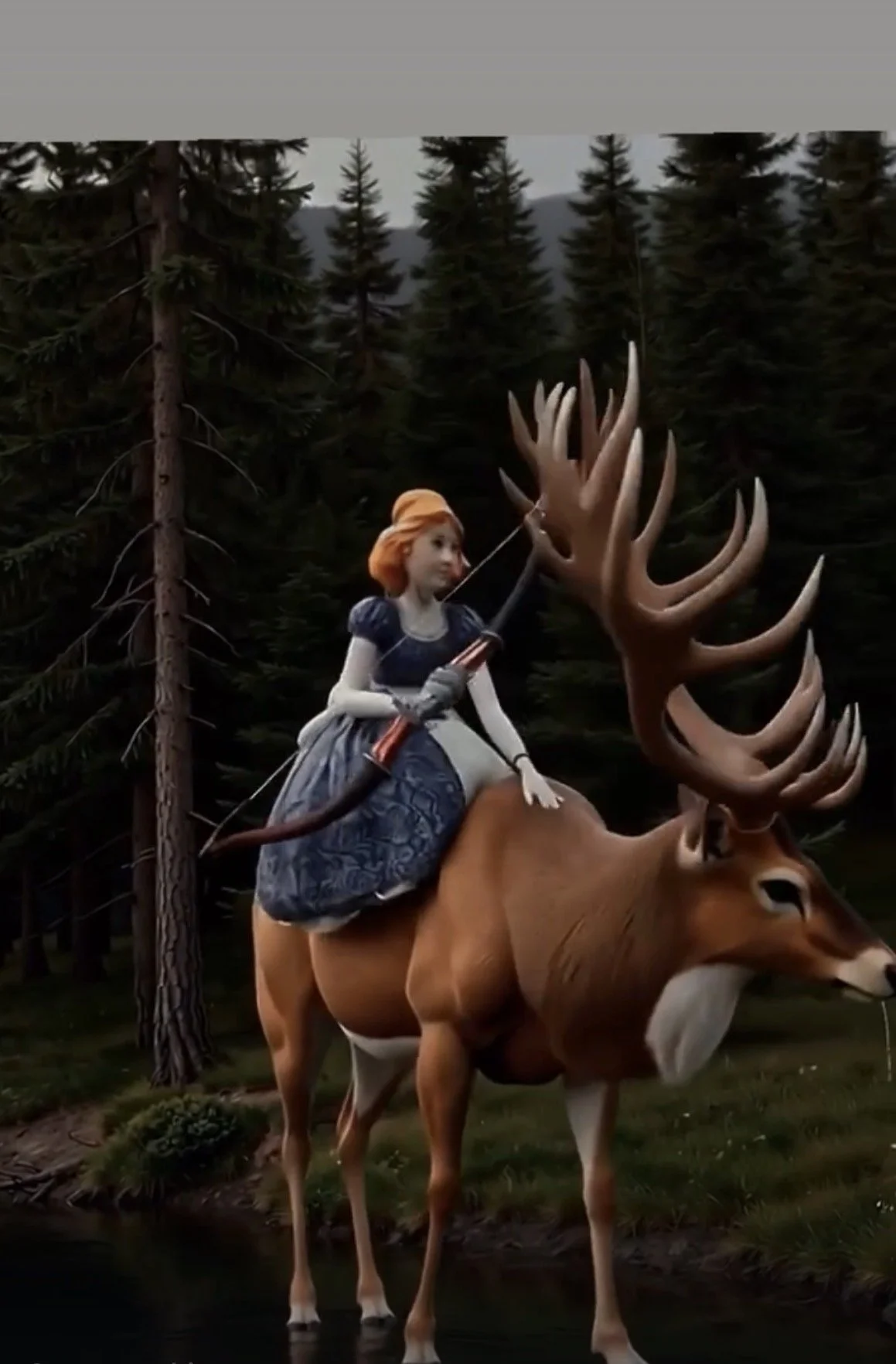
It was late in the afternoon when the young investigator turned her motorcar onto a narrow country road bordered by hedges and winter-pale fields. The air was still, and the light lay softly across the open land.
As she approached a shallow curve, she observed a small child walking alone near the roadside.
The little girl’s steps were uncertain. Now and then she brushed at her eyes with the back of her hand, as though determined to be brave. Once, she paused and looked behind her, toward a distant house scarcely visible through a line of trees.
The driver reduced her speed at once and brought the car to a careful stop.
“Why, what is the difficulty?” she inquired kindly.
The child hesitated before answering. Instead, she lifted one small hand and pointed toward the house — a quiet place with a darkened window and, within, a clock said to have stopped at an hour no one could quite remember.
French Layer (Mid-Century Tone)
Il était tard dans l’après-midi lorsque la jeune enquêtrice engagea sa voiture sur une étroite route de campagne bordée de haies et de champs pâlis par l’hiver. L’air était immobile, et la lumière reposait doucement sur la plaine ouverte.
À l’approche d’un léger tournant, elle aperçut une petite fille marchant seule près du bord du chemin.
Les pas de l’enfant étaient hésitants. Par moments, elle essuyait ses yeux du revers de la main, comme résolue à se montrer courageuse. Une fois, elle s’arrêta et regarda derrière elle, vers une maison lointaine à peine visible à travers une rangée d’arbres.
La conductrice ralentit aussitôt et immobilisa la voiture avec précaution.
« Pourquoi donc, quel est le problème ? » demanda-t-elle avec bonté.
L’enfant hésita avant de répondre. Elle leva plutôt une petite main et désigna la maison — une demeure silencieuse dont une fenêtre était assombrie et où, disait-on, une horloge s’était arrêtée à une heure que nul ne semblait pouvoir rappeler avec exactitude.
THE MUSEUM
MFA/MNH: Museum Archive
Library · Bookstore · Mystery Wing
Le musée est l'endroit où le travail autorisé est organisé, rendu visible et mis en circulation à travers l'histoire.
Il museo è il luogo in cui il lavoro autorizzato è organizzato, reso visibile e messo in circolazione nel corso della storia.
El museo es el lugar donde el trabajo autorizado se organiza, se hace visible y se pone en circulación a lo largo de la historia.
Het museum is waar geautoriseerd werk wordt gehouden, zichtbaar wordt gemaakt en via het verhaal in omloop wordt gebracht.
The Museum is where authorized work is held, made visible, and placed into circulation through story.
Cela ne termine pas le travail.
Il n'attribue aucune identité.
Il ne ferme pas l'arc pour vous.
Il conserve ce qui peut porter de l'attention.
Questo non finisce il lavoro.
Non attribuisce alcuna identità.
Non chiude l'arco per voi.
Conserva ciò che può attirare l'attenzione.
Esto no termina el trabajo.
No atribuye ninguna identidad.
No cierra el arco por ti.
Conserva lo que puede llamar la atención.
Het maakt het werk niet af.
Het wijst geen identiteit toe.
Het sluit de boog niet voor je.
Het behoudt wat aandacht kan dragen.
Entry
Entrée
Rien n'entre dans le musée sans AUTORISATION IP.
Le sceau établit :
• Provenance
• Autorisation
• Admissibilité à la garde
Le sceau confirme que le travail peut être tenu.
Le musée détermine comment il est rencontré.
Entrada
Nada entra en el museo sin AUTORIZACIÓN IP.
El sello establece:
• Procedencia
• Autorización
• Elegibilidad para la custodia
El sello confirma que el trabajo se puede realizar.
El museo determina cómo se encuentra.
Ingresso
Nulla entra nel Museo senza IP CLEARANCE. .
Il Sigillo stabilisce:
• Provenienza
• Autorizzazione
• Idoneità alla custodia
Il Sigillo conferma che il lavoro può essere tenuto.
Il Museo determina come viene incontrato.
Niets komt het museum binnen zonder IP CLEARANCE. .
Het zegel stelt vast:
• Herkomst
• Autorisatie
• In aanmerking komen voor bewaring
Het zegel bevestigt dat het werk kan worden vastgehouden.
Het museum bepaalt hoe het wordt aangetroffen.
Nothing enters the Museum without IP CLEARANCE. .
The Seal establishes:
• provenance
• authorization
• eligibility for custody
The Seal confirms that work may be held.
The Museum determines how it is encountered.
The Library
The Library holds cases, artifacts, and records.
Work may:
• rest without being finished
• be displayed without being exhausted
• remain open without being discarded
The Library is a state of custody, not conclusion.
⸻
The Mystery Wing
The Mystery Wing presents work as investigation.
A case begins simply:
• a question
• a clue
• an object found out of place
The leather satchel appears when a case requires fieldwork.
The satchel is not symbolic.
It is functional.
It carries documents, fragments, and tools.
It moves between shelf and street.
It returns when the case resolves.
Each case reaches an ending.
Some endings close the file.
Some leave a mark inside the satchel.
Across cases, patterns may emerge.
The Museum does not announce them.
It allows them to accumulate.
⸻
Intake
Before a case enters the Library, it must show footing:
• material assembled through effort
• declared direction
• adherence to originating constraints
If these are absent, the work is returned without penalty.
The Museum does not moralize failure.
⸻
Continuity
The Museum honors completion.
A case worked to resolution leaves a trace.
A case abandoned leaves less.
Effort remains recorded. Attendance is registered
⸻
Boundary API Limnel
Nothing enters without
Nothing leaves without record.
Rien n'entre sans laisser de trace.
Rien ne sort sans être consigné.