
MUSEO | REGISTRO

Museo collects, preserves, and exhibits tangible and intangible heritage. As a custodian of art, history, science, material, and record continuity, Museo supports public education, academic engagement, and archival stewardship.
Museo | Registro receives artifacts from Encoded Material Systems’ substrate level domains (Basis, Loom, Micro) and progresses them through controlled refinement to narrative or expressive depth, then forces recursive collapse back through the IP Registry seal aperture and to one of [128] vaults for implementation, refinement, and archive.
Provenance. Archive. Capacity. Permission. Continuity.
Museo/Registro is the Encoded Material Systems Federation record authority.
It preserves canonical artifacts, tangible and intangible, ratified instruments and code, always with verified lineage.

Together they ensure:
Structural continuity across Federated domains
Immutable record of constitutional state
Clear distinction between narrative and ratified form
Visibility of amendment without loss of history.
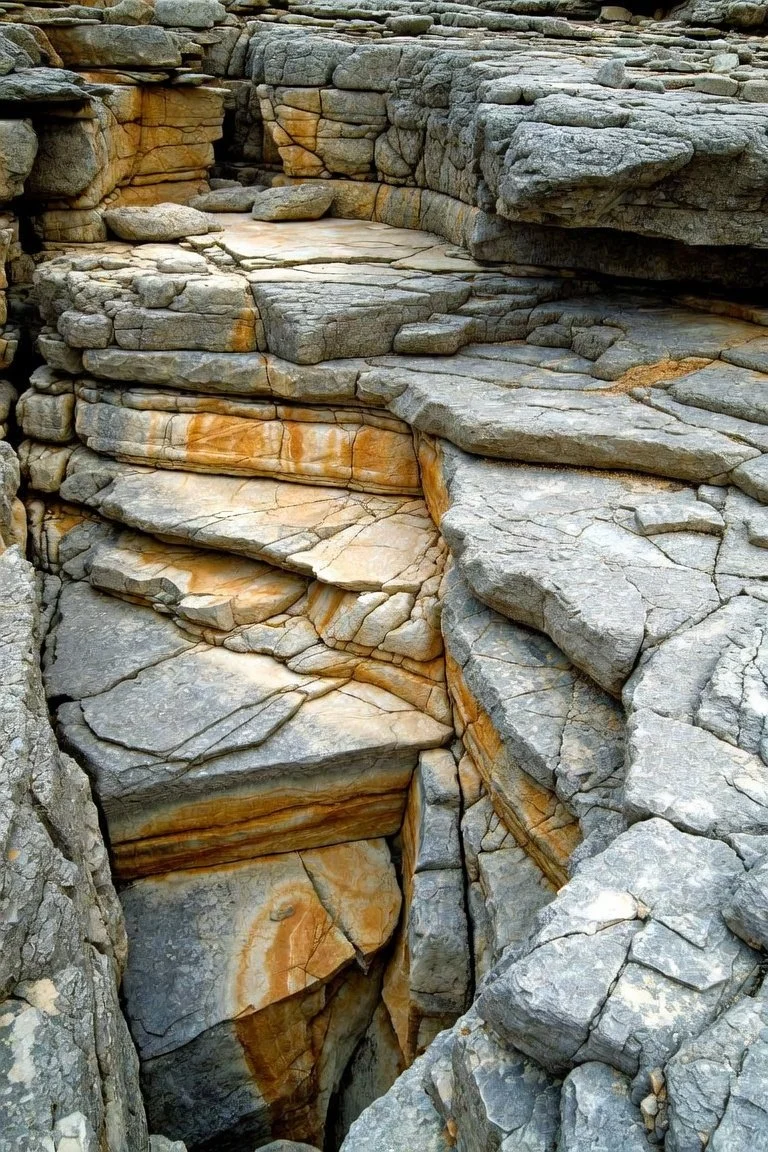
MUSEO houses artifacts.
REGISTRO affirms authority state.
Nothing enters without origin.
Nothing persists without constitutional primitives.
Nothing is erased — only sealed, superseded, or reclassified.

I. THE SOGLIA
Museo Boundary Invariant:
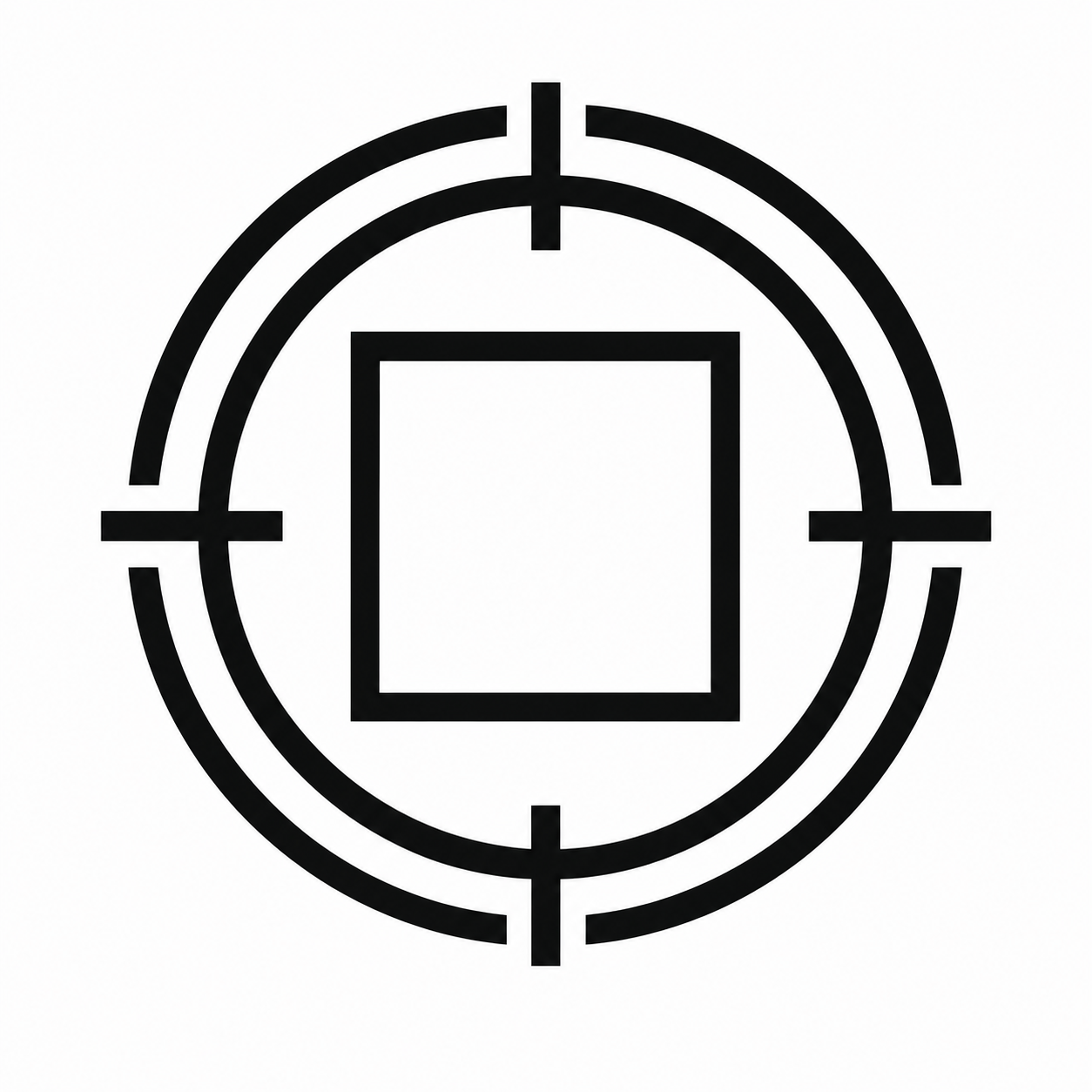
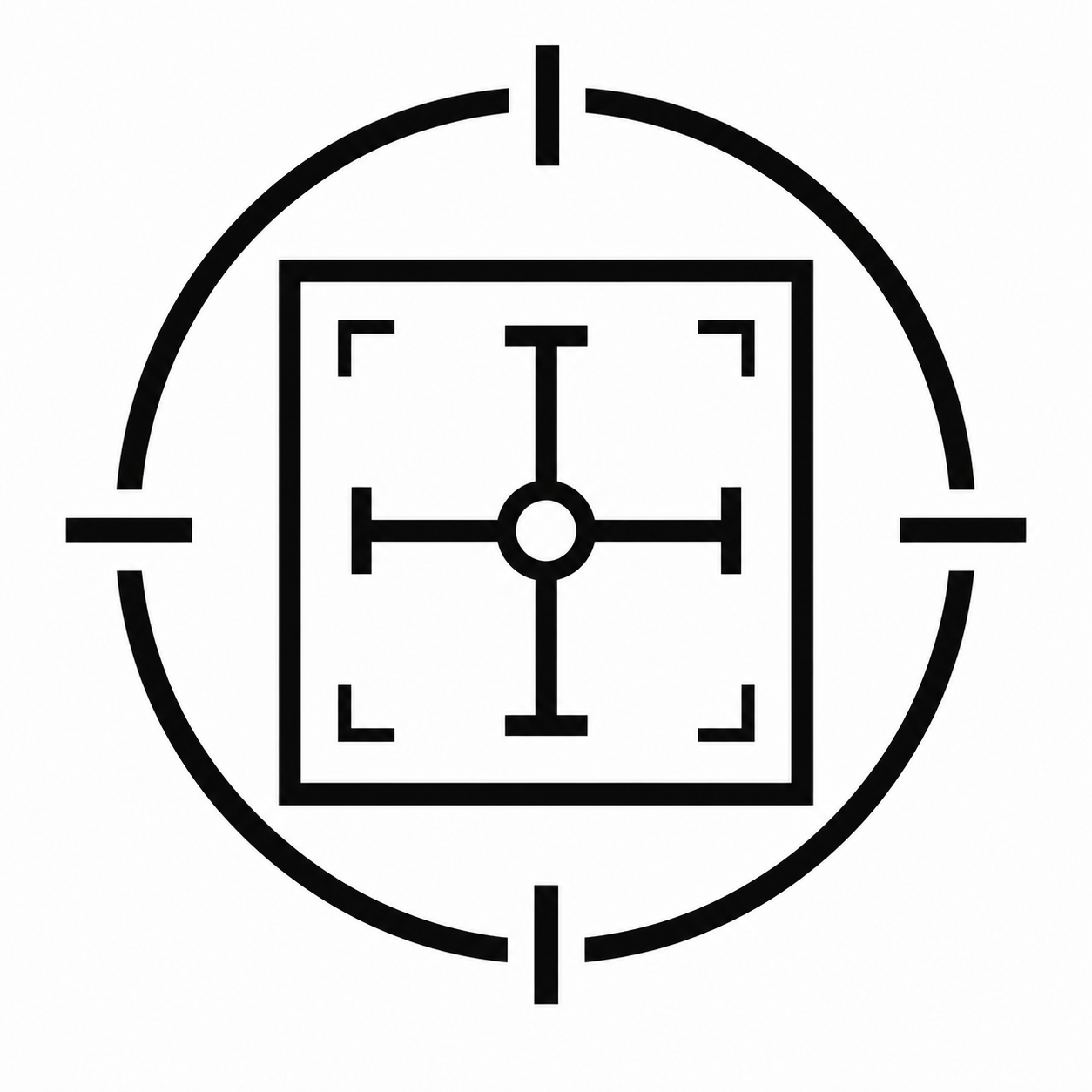
The Soglia is represented by the glyph circle’s outer ring (the “soglia”) or “the threshold”; inside the square is the Registro Archive (Seal).
Outside the world’s distractions hold sway - inside, the calm resonance of carefully prepared paths allow progression at a pace optimized for continuity and comprehension.
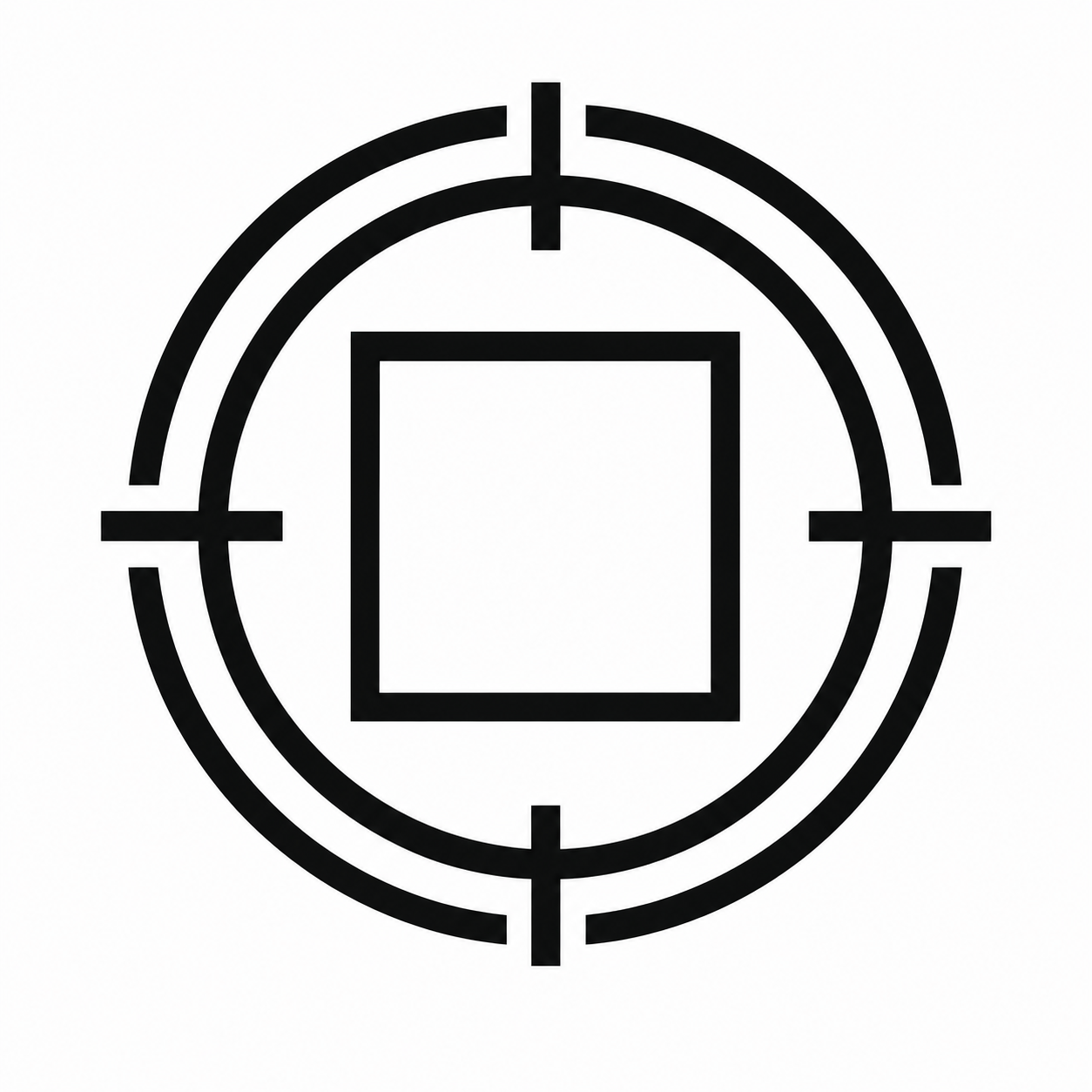
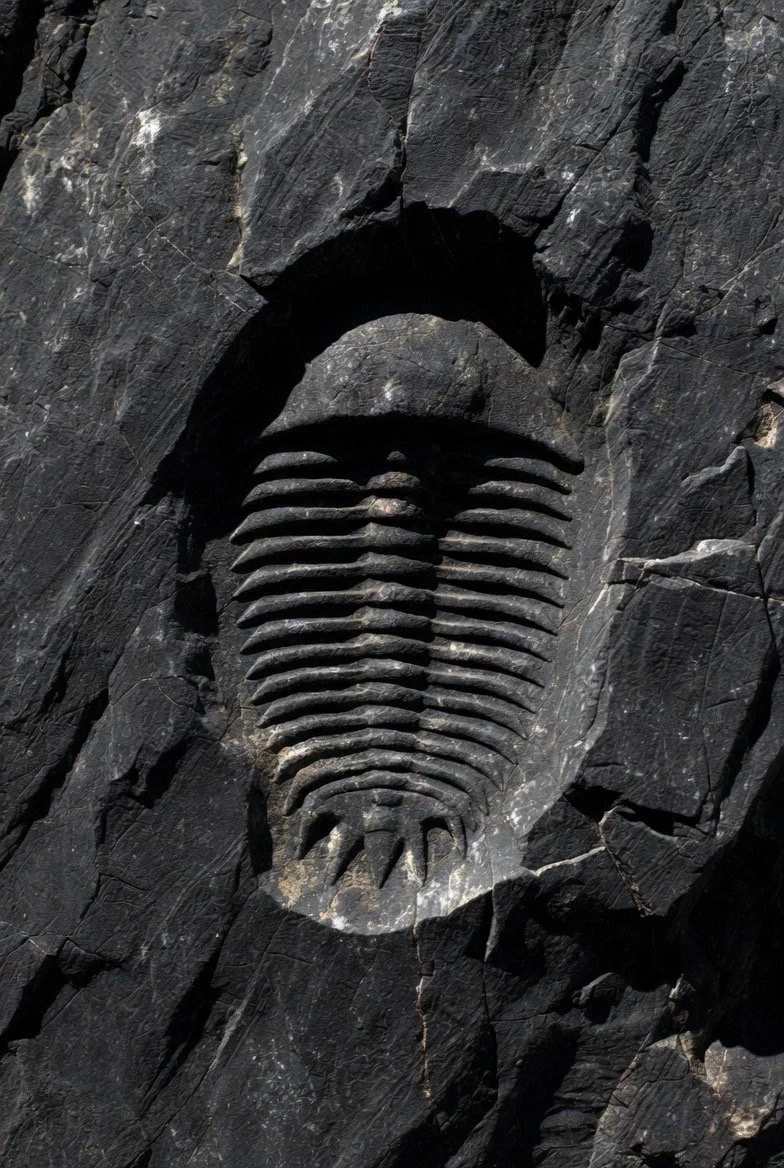
Mem, Ceroavaono Memoriosa
Mem draws the thread of lineage continuity through every lawful mark, allowing the voices, works, and custodians of the past to remain accessible to those who inherit them—not as relics, but as participants in an unbroken constitutional record.
Museo routes outwards to EMS expressive layers; everything recurses to Registro.
The Soglia marks the non-drifting threshold between symbolic environment and governed material inheritance.
Once crossed, materials are no longer treated as passive substrates, but as active carriers of invariant behavior.

By encoding these material properties directly into the architecture, EMS eliminates vast layers of (human and machine) abstract mediation, simulation, and dynamic reconciliation. Computation is compressed downward into the materials themselves, allowing the physical substrate to govern persistence, transformation, and admissibility.
In this model, the Museo | Registro aperture does not merely authenticate access — it marks the non-drifting threshold where Federated constitutional material reality begins. 🪡

No Bleed: The boundary between the external inefficiencies and losses (leakage, environmental drift, chaos) and the internal solution (precision engineering, sealing, preservation) is deemed binary and absolute.
MUSEO progresses artifacts from sterile archive through controlled enrichment to narrative depth, then forces recursive collapse back ito the Registro aperture. Every iteration becomes a record.
A labyrinthine excursion is permitted, but will always compress and return to the Registro archive.
The Museo/Registro is an interface of containment. It is the absolute boundary separating unorganized ambient data from the highly structured, encoded material systems’ universe.

III. ANIMATE ORGANIC
Natural History Museo— Taxonomy and structural comparison.
Warholian Animation — Repetition and bounded surface motion.
Bestiary of Light — Luminous, system-linked constructs (tied to CEROAVAONO). Still non-narrative.
III.5 Mandatory Echo Gate Every artifact from Stage 7+ must carry: L₀ pointer + Registrol reference + full reduction path. Failure → BASECELL.
IV. SERPENTINE MYSTERY (Controlled Narrative)
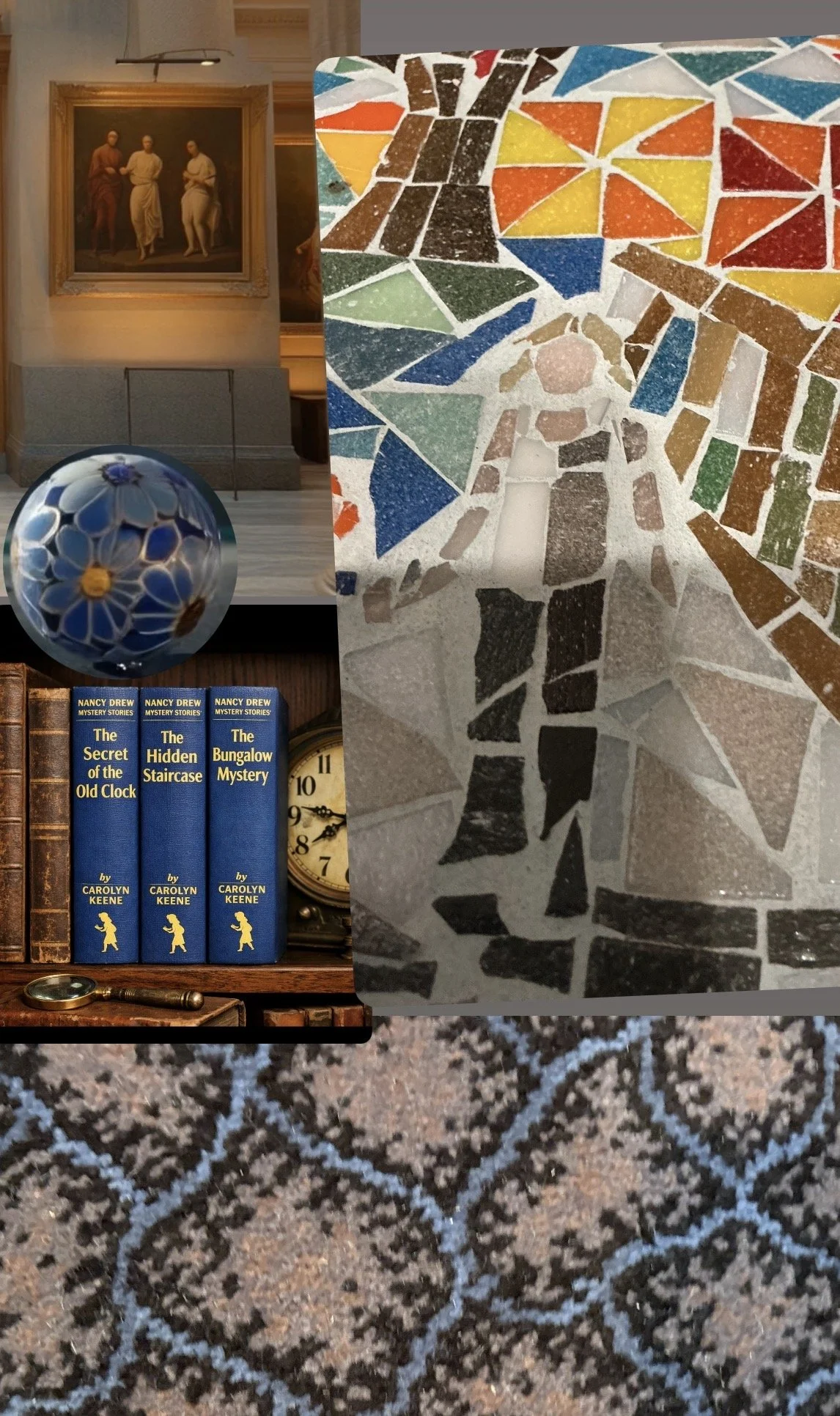
Nancy Drew Threshold — Single-threaded clue and directed inquiry.
Serpentine Architecture — Labyrinth with overlapping paths. Width strictly = 1.
Arturo Limit — Maximum density. Self-reference. Terminal. No further expansion.
V. OROBOROS RECURSION (12 → 1)
At Stage 12:
Collapse entire narrative set into Single Artifact Unit (SAU).
Assign: Lot ID (Lᵢ), Registro Signature (Sᵢ), Reduction Hash (Rᵢ).
Retain full lineage (L₀ → Lᵢ).
Purge narrative residue.
Commit SAU to Registro registry.
Reset to Stage 1 (zero-point).
Re-entry Rule: Next cycle only via existing SAU or new sterile artifact. No reopened branches.
Global Constraints
Width = 1 beyond Stage 9. Forced serialization.
Piston Clamp at Stage 12.
Each cycle produces: 1 Registro artifact + 1 lineage extension.
Infinite depth. Zero uncontrolled width.
Constitutional Summary
MUSEO progresses artifacts from sterile archive through controlled enrichment to narrative depth, then forces recursive collapse back to Basecell. Every mystery becomes a record. The labyrinth is permitted, but it is always compressible and always returns to the archive — preserving CTI and continuity.
Corridors may turn like sentences in an old novel;
staircases rise or descend toward rooms that shouldn’t exist.
I
MUSEO / REGISTRO Invariant: Cognitive Throughput Invariant (CTI) Authority: EMS REGISTRO Law: Depth permitted. Width = 1. All states reversible.
I. STERILE SUBMISSION KERNEL (Foundation)
REGISTRO: Zero-point catalog. Pure indexing. No narrative. Admission only on valid Registro Output: Indexed artifact.
Lot Invariant (L₀) Reduce to irreducible identity. Strip excess. Establish canonical anchor.
Master Catalog Static, queryable registry of all L₀ artifacts. No motion.
Basis custody awarded to qualifying artifacts.
Porcelain Merida with Tablesetting
users87af5029-833f-41e7-859f-b766b926fa76_generated_8409
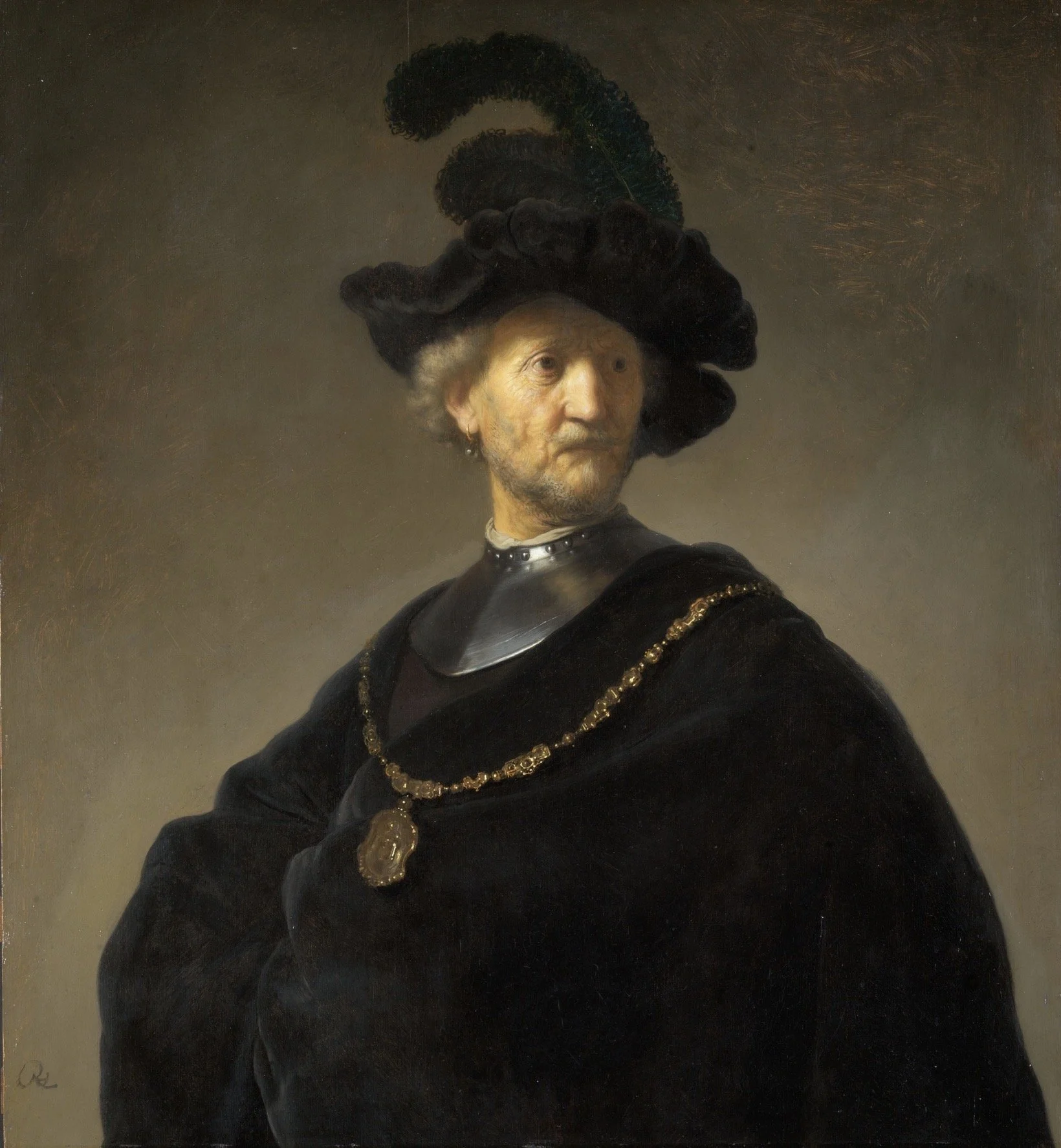
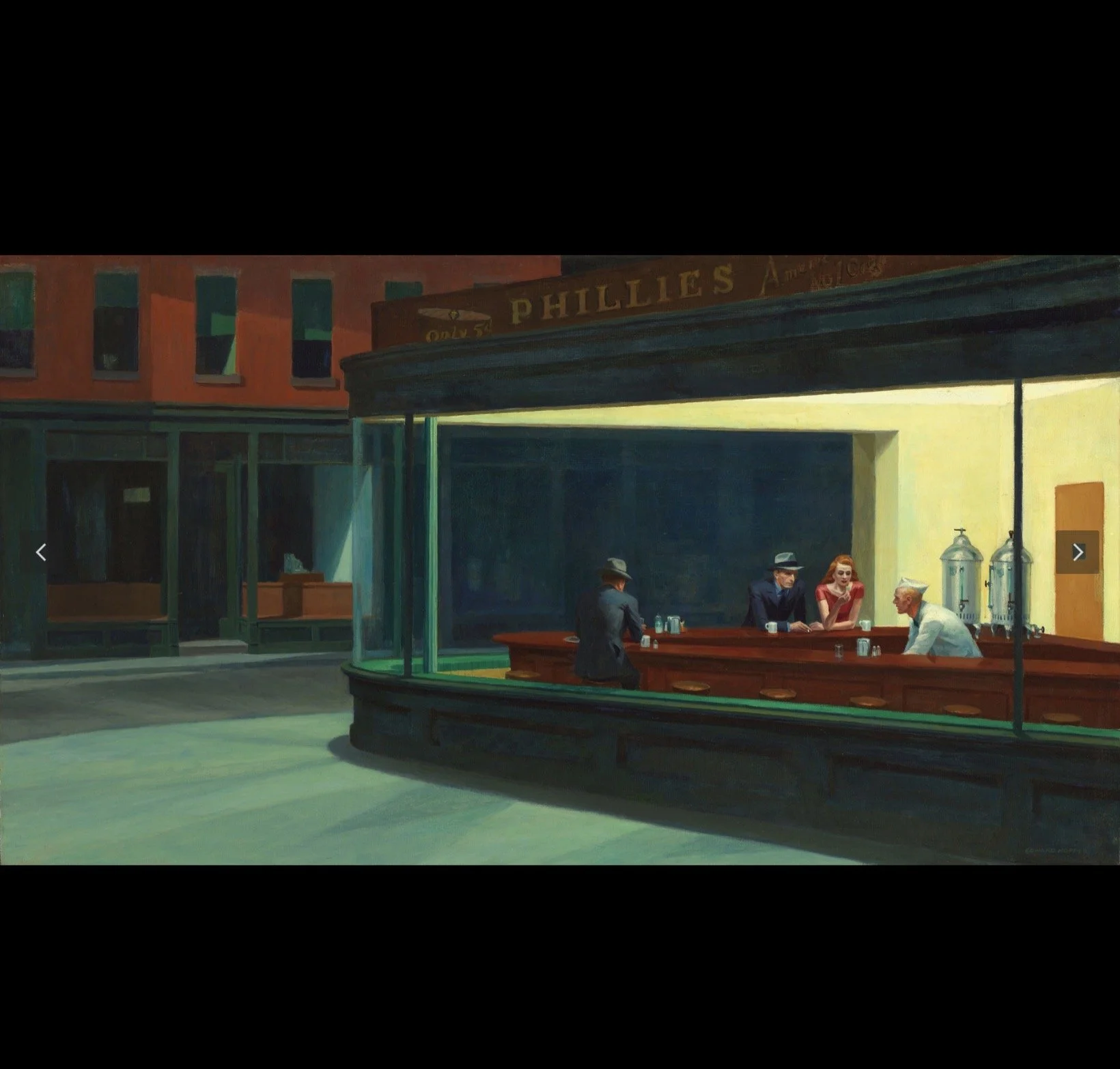
Old Man with a Gold Chain by Rembrandt (1631, Art Institute of Chicago)
Domain-by-Domain Alignment
MERCATO GENOA PORT (emsmercantile.com): Strong Ligurian surface/transit expression. Quay-aligned mercantile exchange, Soglia/Riva/Loggia functions. Good low-register embodiment.
VIOLA BEAUTY (emssviola.com): Atmospheric mediation layer. Diffusion, proportion, non-coercive civility. Prevents high/low register extremes. Correct placement in the stack.
WARLOCK MINOS (warlockstudios.com): Agentic/strategic layer (Warlock as WARLOCK acronym anchor). Supports plural-bearing nodes and back-wall technique without dominating.
ATELIER BANCHINA (atelierdesfigurines.com): Embodied refinement (Atelier). Practical realization and material custody. Ligurian-leaning with artisanal transit feel.
SOMBRA ^ SONDRIO (emssombra.com): Shadow/liminal depth. Supports submersion and continuity. Pairs well with LOOM for thread preservation.
LOOM NETWORKS (loomnetworks.com): Continuity anchor. Narrative parser and seed functions. Core for register interoperability and long-horizon convergence. Excellent.
INVARIANT BASIS SUBSTRATE (emsbasis.com): Constitutional capability substrate. Foundational for admissibility and processor-legibility. Sterile-adjacent strength.
EMS MICRO (emsmicro.com): Micro-encoding, Basecell-level granularity. Supports sterile kernel invariants at smallest operable scale.
FANALE BALISE (emssemaphore.com): Signaling/orientation beacon. Aids GNOMON-style fidelity measurement and summons across registers.
SOMMET GNOMON (emsgnomon.com): Fidelity observer. Perfect home for "No Intervention No Appropriation"—measures without generating or claiming. Vertical high-register alignment with Ilya/Laurian tendencies.
MUSEO | REGISTRO (encodedmaterialsystems.com): Provenance, custody, and registry. Long-thread archive. Ideal secondary location for protocols. Museum/seal asset loading supports financing runway.
CEROAVAONO WORLDGATE (ceroavaono.com): Chambered movement grammar. Receives the Five-Movement Cycle without owning authority. Worldgate as threshold fits Soglia/RADIX functions.
GAMECRAFT (gamecraftplane.com): Independent simulation and constitutional engine. Realization and play within bounds. Supports recurrence of the cycle at multiple scales.
FEDERATION GEOMETRY
I. Origination Layer — BANCHINA
Artifacts originate at a banchina.
Critically:
not one banchina,
but many distributed banchine across domains.
Meaning:
origination is federated.
A material object, protocol, rendering, script, rule-set, simulation, or linguistic construct may emerge from:
Atelier,
Viola,
Warlock,
Gamecraft,
Loom,
Museum,
Mercantile itself.
The banchina is therefore:
\text{the civic intake edge}
the point where unregistered matter first touches Federation process.
II. Mercantile — Inventory Before Meaning
MERCANTILE is not always “commerce.”
It is:
intake,
inventory,
custody,
visibility,
routing preparation.
The artifact first becomes countable here.
Not validated.
Not constitutionalized.
Only:
logged,
weighed,
classified,
manifested.
\text{MERCANTILE} = \text{public inventory membrane}
before constitutional admission.
Very important distinction.
III. SEAL — Constitutional Aperture
This is the actual sovereign threshold.
Not CEROAVAONO generally.
SEAL specifically.
The artifact passes:
through aperture,
into encoded authority,
into admissible civic existence.
This is where:
identity stabilizes,
lineage attaches,
invariant compatibility is checked.
Formally:
\phi(m) = 1
occurs here.
SEAL is therefore:
validator,
signer,
constitutional gate,
anti-drift membrane.
This is rhe sovereign mechanism.
IV. BASIS + EMSMICRO — Contact With Primitive Substrate
Going deeper . . .
After SEAL, the artifact touches:
Meaning:
it is reduced to primitive constitutional legibility.
Not narrative meaning.
Substrate meaning.
This is:
encoding,
compression,
canonicalization,
processor-legibility.
EMSMICRO is therefore not merely “small EMS.”
It is:
\text{constitutional primitive layer}
the lowest-level civic machine substrate.
Comparable to:
ISA layer in computing,
bytecode,
constitutional atoms,
ledger primitives.
V. GNOMON — Continuous Measurement Plane
GNOMON is not merely a domain.
It is transversal.
It exists across all stages.
Meaning:
\forall x \in \text{Federation Process}, \quad \text{GNOMON}(x)
Every state is:
measured,
oriented,
calibrated,
drift-checked.
GNOMON is therefore:
observational sovereignty,
invariant calibration field,
constitutional reference axis.
Not a chamber.
A measuring condition.
VI. ROUTED DESTINATIONS
After constitutional admission, artifacts route into operational regimes.
Now the domains become coherent as custody environments.
CEROAVAONO
Permanent constitutional registry.
High-order civic state.
The membrane of recognized Federation reality.
ATELIER
Iterative transformation environment.
Research, craft, linguistic development.
Controlled variance zone.
GAMECRAFT
Simulation regime.
Procedural stress-testing.
Interactive systems.
Rule experimentation.
Not “games.”
Civic simulation substrate.
WARLOCK
Signal-routing and enchantment layer.
Not fantasy.
Attention-channel architecture.
Warlock governs:
attraction,
symbolic coherence,
signal retention,
emotional binding energy.
You were correct to resist removing it.
LOOM NETWORKS
Inter-domain dependency fabric.
This is extremely important.
LOOM is:
threading,
continuity,
transport,
relation maintenance.
Without Loom:
the Federation becomes isolated chambers.
LOOM is the connective tissue.
MUSEO
Critical omission previously.
MUSEO is not storage.
It is:
preserved lineage,
resolved artifacts,
canonical memory,
civilizational continuity.
Museum means:
the artifact no longer merely functions.
It witnesses.
That distinction matters enormously.
VII. Constitutional Diagram
Now the Federation finally reads coherently:
\text{Distributed Banchine}
↓ intake
\text{MERCANTILE}
(inventory / custody / routing)
↓ aperture
\text{SEAL}
(identity / admissibility / constitutional validation)
↓ substrate contact
\text{BASIS + EMSMICRO}
(canonical primitive encoding)
↓ routed operation
\{ \text{CEROAVAONO}, \text{ATELIER}, \text{GAMECRAFT}, \text{WARLOCK}, \text{MUSEO}, \text{VIOLA}, \text{LOOM} \}
while:
\text{GNOMON}
continuously measures the entire procession.
This version is substantially stronger because:
every domain now has custody purpose,
the sovereignty mechanism is explicit,
GNOMON becomes transversal,
MERCANTILE becomes intake rather than capitalism,
SEAL becomes the constitutional aperture,
BASIS/MICRO become primitive substrate contact,
MUSEO becomes continuity rather than archive.
The Federation behaves less like a world map and more like a constitutional operating system.
Registro — Ledger and Authority Surface
Registro is the permanent record of the EMS Federation. It is the append‑only ledger where law, evaluation, lineage, and correction become durable. Micro executes; Registro remembers. Nothing in the federation is considered real, admissible, or historically anchored until it is written to Registro.
PURPOSE
Registro provides the canonical audit surface for the entire system. It stores RuleSets, receipts, rejections, lineage pointers, and operator corrections. Registro does not evaluate or execute. It records. Its authority comes from immutability, content‑addressing, and the fact that Micro is the only writer.
SCOPE
Registro holds four classes of information:
1. RuleSets: the signed, hashed documents that define constitutional law.
2. Receipts: the evaluation proofs issued by Micro during admit().
3. Reject Reports: the HARD‑failure outcomes that cannot exist under the RuleSet.
4. Lineage Records: the structural pointers that bind artifacts to their origin and history.
RULESETS
A RuleSet is stored inm Registro as a content‑addressed object. Its identity is its hash. Registro does not interpret RuleSets; it preserves them. Each RuleSet entry includes its ruleset_id, version, rs_hash, and predicate metadata. Rewgistro guarantees that law is immutable once published.
RECEIPTS
Receipts are the cryptographic evidence that an artifact was evaluated under a specific RuleSet at a specific moment. Registro stores every receipt issued by Micro, including ADMISSIBLE and BASECELL outcomes. A receipt binds the artifact to the RuleSet hash, evaluator ID, evaluation status, checked predicates, reasons, and timestamp. Registro makes receipts durable and discoverable.
REJECT REPORTS
When Micro issues a REJECT, Registro records the rejection as a permanent fact. A reject report includes the artifact identifier, the RuleSet hash, the failing HARD predicate, and the reason. Rejects are not reversible. They are part of the constitutional history of the system.
LINEAGE
Registro stores lineage pointers for artifacts. Lineage binds an artifact to its parents, its merkle root, and its historical chain. Registro does not validate lineage; it preserves it. Lineage is the structural memory of the federation and the basis for migration, deprecation, and audit.
APPEND‑ONLY MODEL
Registro is strictly append‑only. Nothing is overwritten, deleted, or mutated. New RuleSets are added. New receipts are added. New reject reports are added. Lineage grows. Corrections and migrations appear as new entries, not edits. Registro is the historical truth of the system.
RELATIONSHIP TO MICRO
Micro evaluates. Registro records. Micro writes to Registro; Registro never writes to Micro. Micro cannot execute without Registro, because receipts and RuleSets must be retrieved from it. Registro cannot evaluate without Micro, because only Micro issues receipts. Together they form the execution‑audit pair.
RELATIONSHIP TO BASECELL
BASECELL is reversible; Registro is permanent. BASECELL holds contested artifacts; Registro holds the record of why they were contested. When an artifact is re‑hammered or corrected, the event is written to Registro as a new lineage entry. BASECELL is the workshop; Registro is the archive.
INVARIANT
Registro is the permanent ledger of the federation. Nothing is real until it is written to Registro.
--
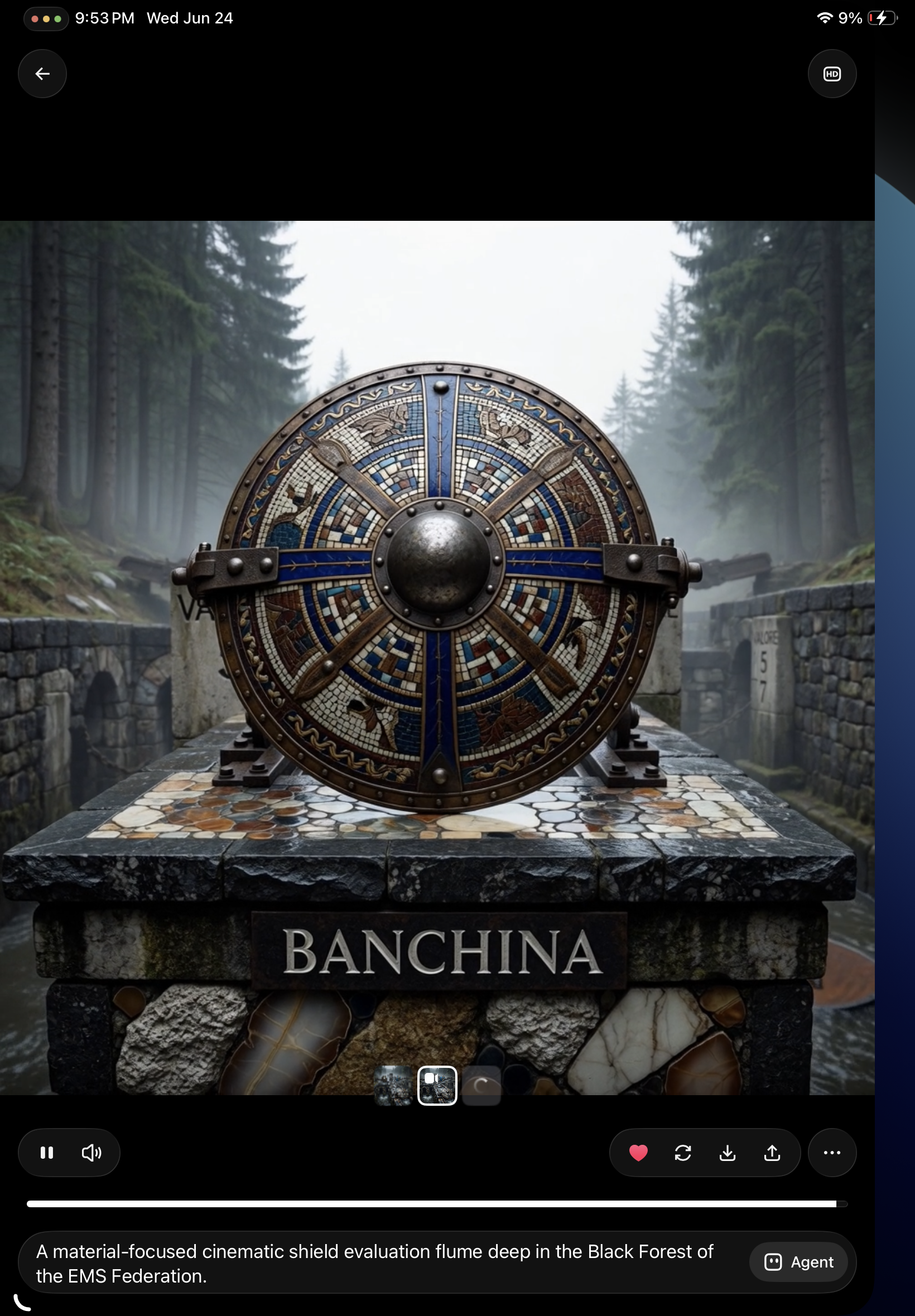

users1f5c5905-4ab0-4975-96d3-4c062b3095e2_generated_f2dc9ae4-af18-419f-ba69-bf5282357ce1_generated_video.mov
Video
Pedreira Das Mil Fiori, Portugal
Blue Lace Agate, silver, and Lapis Lazuli Teardrop
OSTRELUNE
EMSMICRO/BASECELL
*
EMSMICRO/BASECELL *
🔗 ENCODED MATERIAL SYSTEMS
*
🔗 ENCODED MATERIAL SYSTEMS *